Leadership As a Living System: Cultivating Leaders Through Whole Body Intelligence
Leadership As a Living System: Cultivating Leaders Through Whole Body Intelligence
Much of our modern ideas of leadership today emerges from our corporate world. This world is awash with dizzyingly amounts of models, competencies, and frameworks.
Ask what a leader does and they quickly show you their favored frameworks and the data to back them. AND here’s the thing most leaders already know, there’s also a more shadow side of models,
competencies and frameworks and that is the frustration with them. And with that frustration comes the reality of what looks clear on paper rarely holds under pressure.
There's a reason for this and it's because leadership is not something we apply.
It is something we participate in.
Leadership Lives in the Individual…Yes
AND…
We tend to locate leadership inside the leader and leave it there:
We rely heavily then on their thinking, their decisions, their capabilities.
But in practice, leadership is by design an expansive concept beyond us.
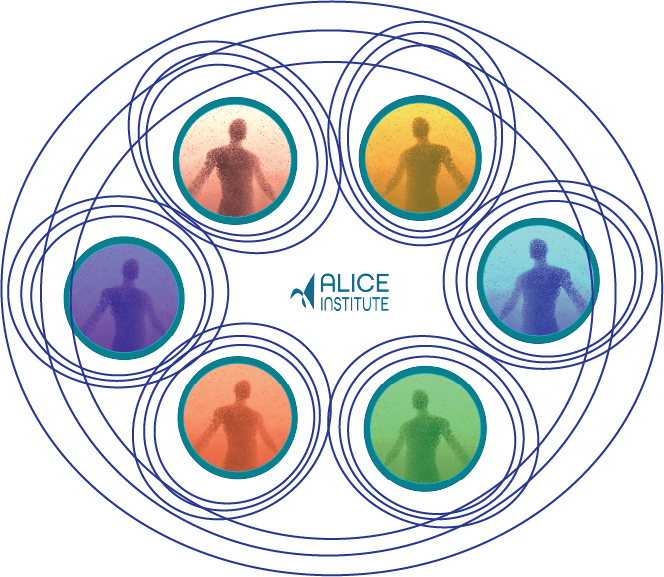
Leadership inherently lives between people.
Leadership lives:
In the tone of a conversation.
In the pause before a response.
In whether tension escalates—or settles.
This “between” is not abstract.
It is a constantly shifting relational environment that shapes everything from trust to performance.
Whole-Body Intelligence Is NOT Another Framework -
Whole-Body Intelligence is often misunderstood at first glance.
It is not:
A model to implement
A set of steps to follow
Another leadership framework that sits on top of the already existing ones
Whole Body Intelligence is far more revolutionarily evolutionary operating as a dynamic ecosystem of human capacities.
Within it, there are tools, skills, and practices.
Yes…AND those are secondary.
What matters most is the leader’s ability to:
Sense what is happening in real time
Come into coherence with their own internal state
WHILE responding in a way that
A) stabilizes the system,
B) aligns the system around them
C) collaboratively co-creates forward moving momentum
This cannot be reduced to a diagram.
Because it is dynamic, not static.
Leadership as a Living System
Every team, organization, or partnership operates as a living system.
And every leader is part of that system—not outside it.
This means:
You don’t just influence outcomes
You influence conditions
You are continuously shaping:
The level of psychological safety
The quality of communication
The degree of fragmentation from alignment
Not only through what you say,
but through how your system shows up.
This cannot be reduced to a diagram.
Because it is dynamic, not static.
The Role of the Body in Leadership
Under pressure, people don’t default to strategy.
They default to their conditioning.
This is why highly intelligent, experienced leaders can still:
Shut down conversations
Escalate tension
Undermine trust unintentionally
Whole-Body Intelligence brings attention to something often overlooked:
The body is not separate from leadership—it is central to it.
Your body locates your intelligence from which it:
Signals safety or threat
Expands or contracts possibility
Brings the people into coherence around you or doesn’t
People respond to your whole body intelligence capacity long before they process your words, consciously or unconsciously and you theirs.
The Relational Direction of Leadership
If we move beyond our limiting concept of leadership and acknowledge that leadership is relational, then its direction by definition also changes.
It is no longer about:
Driving outcomes from
the top
Managing performance from a distance
It becomes about:
Participating consciously in the relational field
Creating coherence under pressure
Enabling others to function at their best
This is not softer leadership.
It is more precise leadership.
Because it works at the level where behavior is actually shaped.
Why We’re Ready for Whole Body Intelligent Precision-Based Leadership
In environments defined by uncertainty and speed,
technical competence is not enough.
Organizations don’t fail because of a lack of strategy.
They fail because:
Trust breaks down
Communication distorts
People operate in misalignment
All of which are relational failures.
Whole-Body Intelligence addresses this directly—not by adding complexity, but by increasing capacity and access into a system leaders are already shaping.
A Different Kind of Leadership Development
This work does not start with learning yet a new diagrammatical frame.
It starts with a human-centric capacity for noticing:
What happens in you under pressure?
What happens between you and others?
What patterns repeat across situations?
From there, skills and tools become useful.
But they are applied within a deeper understanding:
Leadership is something you are continuously co-creating with others, as much as what you are creating yourself and above all it leads us into an appreciation that we limit ourselves when we withhold our concept of leadership to merely something we execute alone.
Closing Thoughts...
Leadership begins with the individual. And we agree here that it does for sure. However we see it’s as essential for leadership if not more than ever before to begin opening up to the new rules of the leadership arena in understanding that it pivots more than ever before on a leader's relational capacity.
The quality of these relationships is what defines a leader’s ultimate impact.
To limit leading effectively to the ability to merely think clearly or act decisively is simply not adequate in the direction our world is evolving.
The new leadership strengths being required of all of us are now well beyond the traditional definitions of what we think leadership means and indeed perhaps what it has meant for millennia.
While we’ve seen great strides in leadership as a key aspect of human development, its future development lies beyond the merely strategic horizontal skill sets we’ve wrapped frameworks around so far.
The future of leadership requires a paradigm level shift from traditional leadership to a whole new way of leading.
This is about a much more robust and deeper vertical as well as horizontal development of a leader.
The effect of making the shift into this kind of new leadership is the equivalent of going quantum.
And quantum leadership is about opening up a whole new range of intelligences in defining what it increasingly means to lead in the 21st century and beyond.
This is exciting and our capacity for engagement as human beings in this is not only possible it is imperative to meet technology and all it has to offer us. This doesn't come without warning too if we fail to invest on the human side of this equation.
And to meet this it begins in how prepared we are to engage consciously in the living system we are part of—and to shape it in ways that create trust, coherence, and sustainable performance.
That is the work of Whole-Body Intelligence.
About the Author
Alice Gannon is a strategic advisor, writer, and creative whose work integrates whole-body intelligence, relational insight, and brand clarity to help leaders and organizations, and people in private life move from fragmentation to coherence.
She is the principal of Ravennabridge, a strategy studio specializing in identity architecture, narrative development, leadership clarity, and aligned execution.
Alice’s work bridges human dynamics and organizational strategy. She helps clients articulate who they are, what they stand for, and how to communicate it in ways that align culture, leadership, customer experience, and business growth. Her approach is grounded in the belief that clarity is a relational skill—and that organizations evolve when leaders do.
In addition to her applied work at Ravennabridge, Alice is the founder of the ALICE Institute, the educational arm of her body of work, where she teaches the deeper frameworks behind coherence, emotional patterning, and whole-body intelligence.
Her writing and personal advisory live at AliceGannon.com, where she explores identity, meaning, relationships, and the human side of leadership.

... I am so glad you're here and I want to welcome you to reading our articles here and personally invite you to participate in our events. What we co-create here is unique.
These events are about discovery and unfolding you from surviving to thriving.
We are excited that you are curious about being a part of this and we look forward to seeing you soon!
Alice Gannon
Have a question, comment on what you're reading here, or have idea for an event?
Let us know!
We want to hear from you!
The ALICE Institute © Copyright 2026 hiberno Studios LLC. All rights reserved. Terms & Conditions