



What is Whole Body Intelligence
What Is Whole Body Intelligence?
Claiming A New Pathway Through a Complex World
We are living in a time defined by extraordinary complexity. Systems are accelerating, relationships are straining, and the pace of change routinely outstrips our capacity to make sense of what is happening—within ourselves, between one another, and across the world we share.
In response, we’ve doubled down on strategies, structures, and cognitive frameworks aimed at managing this complexity.
Yet despite unprecedented access to information and tools, many people feel less clear, less connected, and less able to respond to the conditions they are facing.
It is becoming increasingly evident that our skills have not evolved at the same pace as the environments we inhabit. We have privileged cognitive development while neglecting the very intelligences that allow cognition to operate in context.
Cognitive dissonance, viewed through the lens of Whole Body Intelligence, is therefore not surprising—it is an expected outcome of a system trained to rely on only one part of its total capacity.
This is not because we lack intelligence.
It is because we have been trained to access only a fraction of it.
Whole Body Intelligence encapsulates a more complete, and profoundly evolutionary, way of sensing and responding—one that has always been available, but which modern life has systematically narrowed.
It offers a framework not for fixing people or controlling behavior, but for restoring coherence in how we perceive, relate, and create together.
"Whole Body Intelligence encapsulates a more complete, and profoundly evolutionary, way of sensing and responding—one that has always been available, but which modern life has
systematically narrowed."
Beyond the Mind Alone
Modern culture treats cognition—thinking, analyzing, problem-solving—as if it were the primary or even exclusive source of intelligence.
These capacities matter deeply. But they are not sufficient for navigating the emotional, relational, and systemic
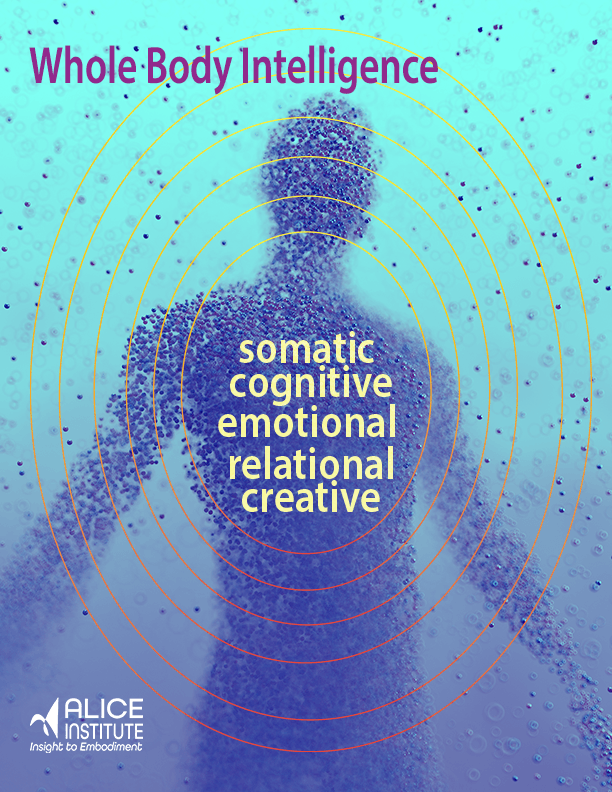
complexity of our time. Whole Body Intelligence refers to the integrated capacity of the human system to perceive and respond to reality through more than cognition alone.
It includes:
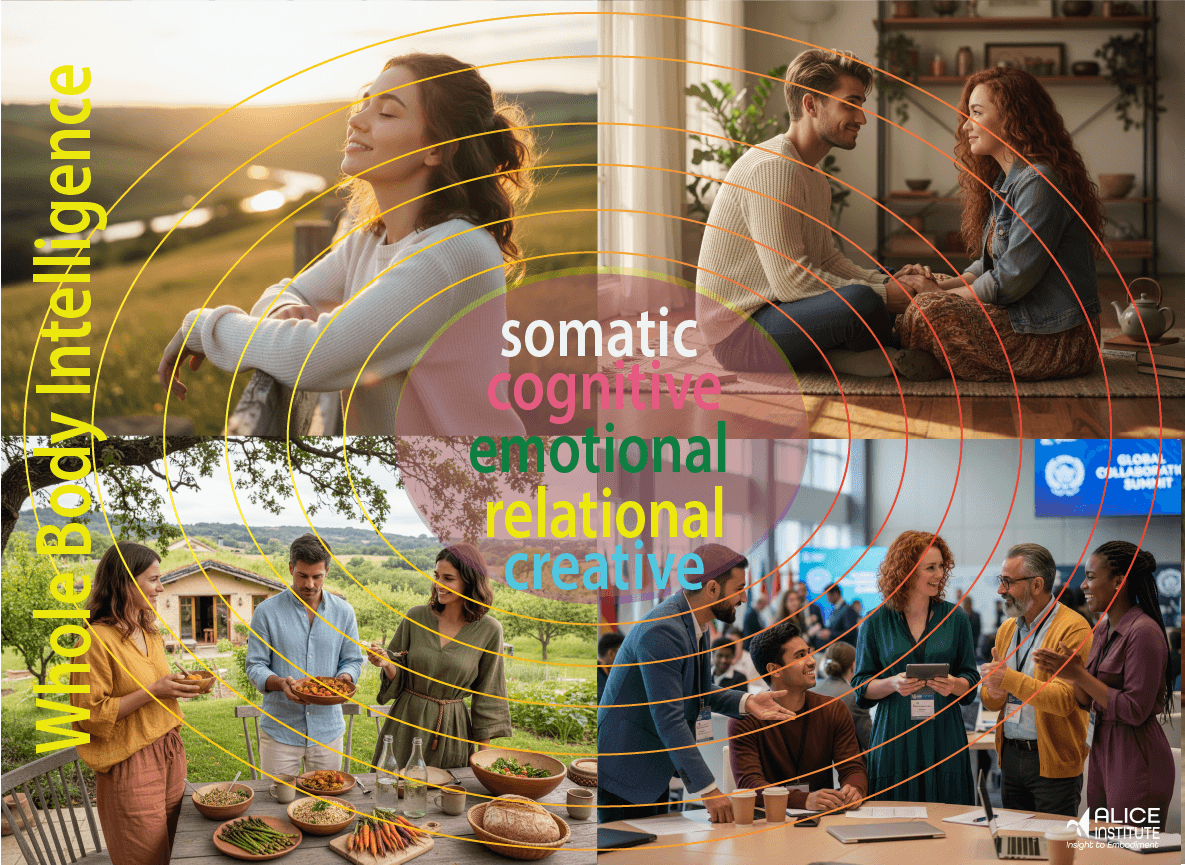
Somatic intelligence — the body’s sensory, intuitive, and physiological knowing
Emotional intelligence — affective signals and relational attunement
Cognitive intelligence — thought, language, and conceptual insight
Relational intelligence — awareness of fields, dynamics, and shared meaning
Creative intelligence — the capacity for insight through integration
These are not separate channels.
They are interdependent dimensions of a single living intelligence.
These are not separate channels.
They are interdependent dimensions of a single living intelligence.
When these dimensions are accessible and integrated, we meet complexity with clarity rather than urgency, creativity rather than reactivity, and presence rather than control.
This alignment is what we call coherence—the cornerstone of the ALICE Institute’s work.
The Is of Whole Body Intelligence
Whole Body Intelligence is not something that turns on or off.
It is not a capacity we gain or lose.
It is always present, operating across biological, emotional, cognitive, relational, and systemic layers.
The real question is not whether Whole Body Intelligence exists, but whether we are consciously connected to it.
Much of contemporary conditioning trains us away from this connection.
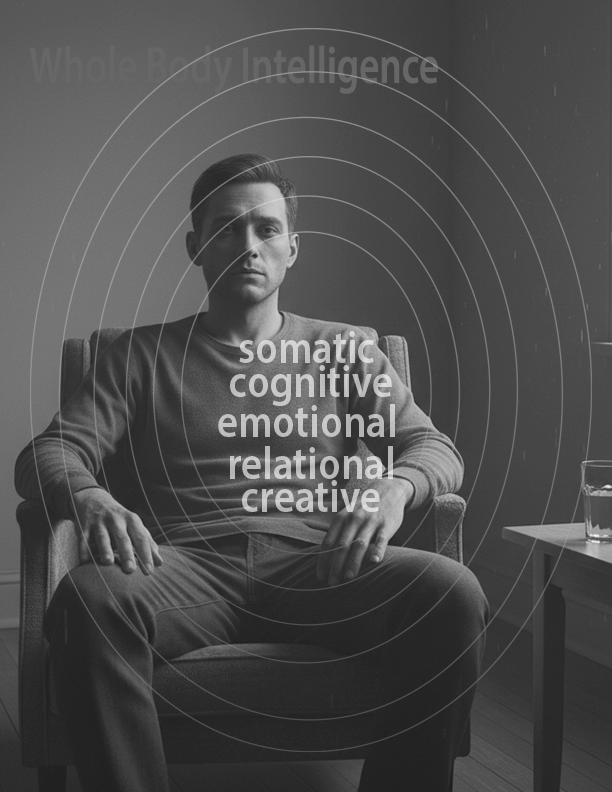
We learn—implicitly and explicitly—to override sensation, suppress feeling, move quickly, and prioritize outcomes over presence.
Over time, our perceptual field narrows and we lose access to real-time intelligence.
When this access is limited, even highly capable people default to outdated strategies, patterned defenses, or habitual responses.
Their intelligence is intact—but their access to it has constricted.
Finding Feeling as Foundation
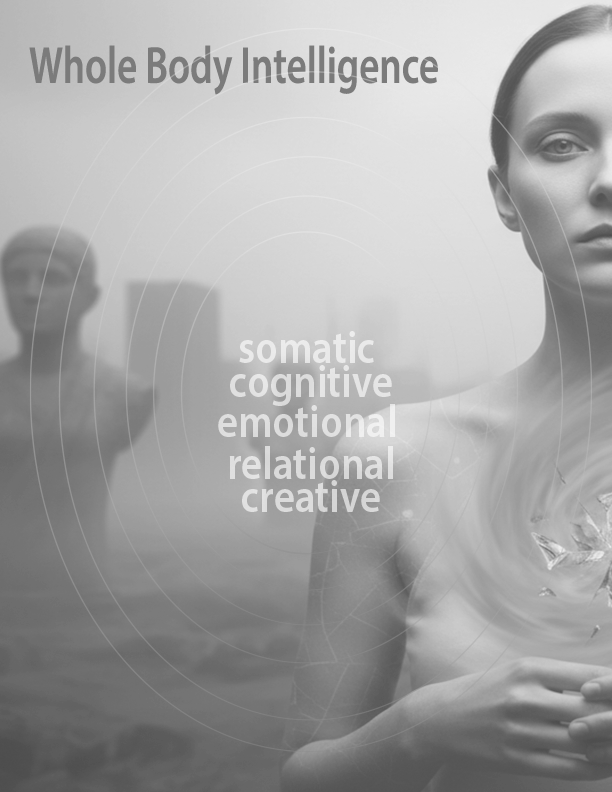
One of the greatest losses in modern culture is our relationship to feeling—not emotion as something to manage, but feeling as a primary mode of perception.
Feeling is not opposed to intelligence.
Feeling is intelligence.
To be conscious is to be sentient—to register life through sensation, emotion, and relational resonance long before thought arrives.
These signals alert us to:
misalignment
possibility
danger
coherence
meaning
Yet when sensation is ignored, overridden, or numbed—as is increasingly common—cognition is left to operate without essential context.
Vitality diminishes, and with it, our capacity to participate meaningfully in our relationships, work, and world.
Is this dramatic?
Perhaps.
AND it is also pervasive.
Most people assume they know how to feel simply because they experience emotions.
But experiencing emotion is not the same as accessing feeling as intelligence.
Whole Body Intelligence restores feeling as a legitimate and necessary source of knowledge—one that supports integrity, authenticity, and aligned action.
It returns us to the full spectrum of what it means to be human.
"Most people assume they know how to feel simply because they experience emotions.
But experiencing emotion is not the same as accessing feeling as intelligence."
Love as the Ground of Coherence
At the heart of Whole Body Intelligence is love—not as sentiment or idealism, but as a foundational intelligence of connection.
Love is enough. It is the ground of coherence, care, and relational truth.
The challenge is not that love is insufficient. It is that many of us have not developed the embodied capacity to access and express love coherently under real-world conditions—especially when stakes are high or systems are complex.
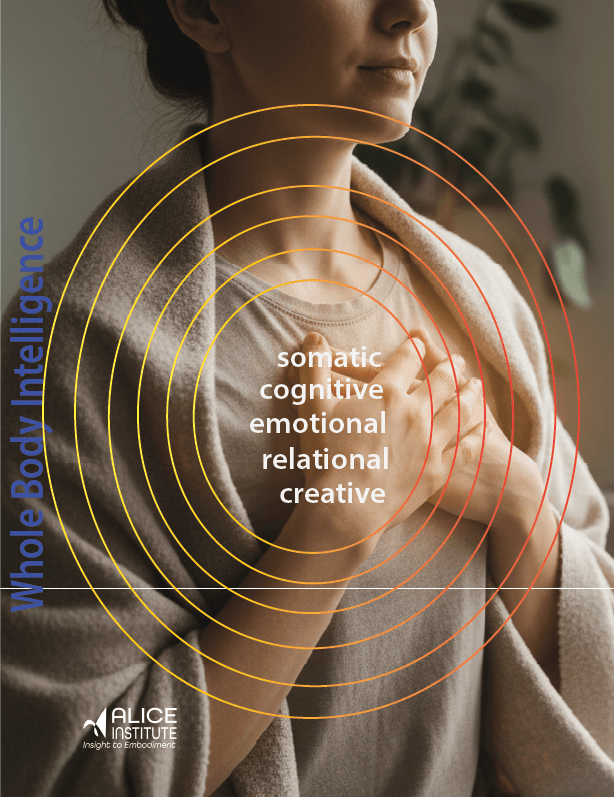
Whole Body Intelligence provides the grounding through which love can move with integrity—through sensation, feeling, thought, and relationship—without collapsing into reactivity, avoidance, or control.
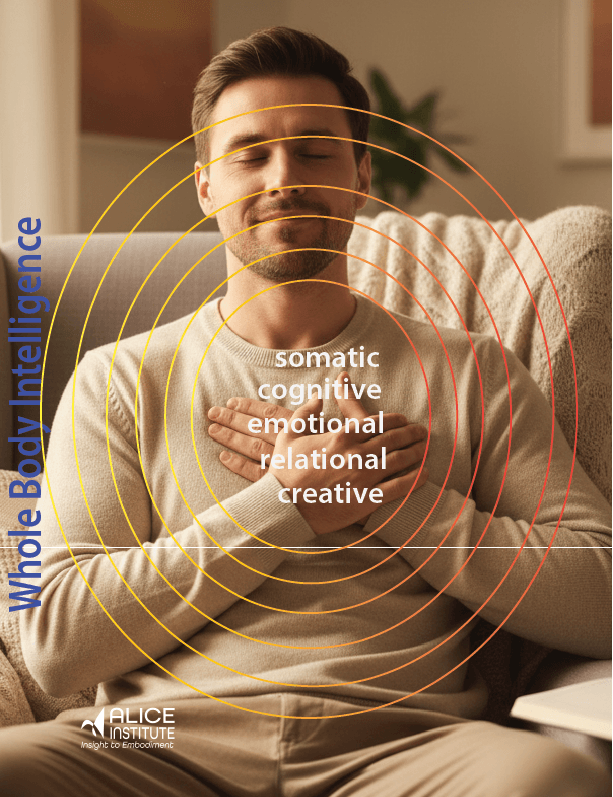
When Whole Body Intelligence is online, love becomes actionable. It becomes something we can orient to in the ways we listen, decide, speak, and respond—not as an abstraction, but as lived intelligence.
Relational Contexts as Learning Fields
Whole Body Intelligence is inherently relational. It does not develop in isolation.
Families, partnerships,
organizations, and communities are living fields where intelligence can be practiced and embodied.
These contexts reveal where coherence is present and where access to intelligence has narrowed.
Struggle within these contexts is not failure. It is an indicator that the complexity of the situation has outpaced the frameworks available to meet it.
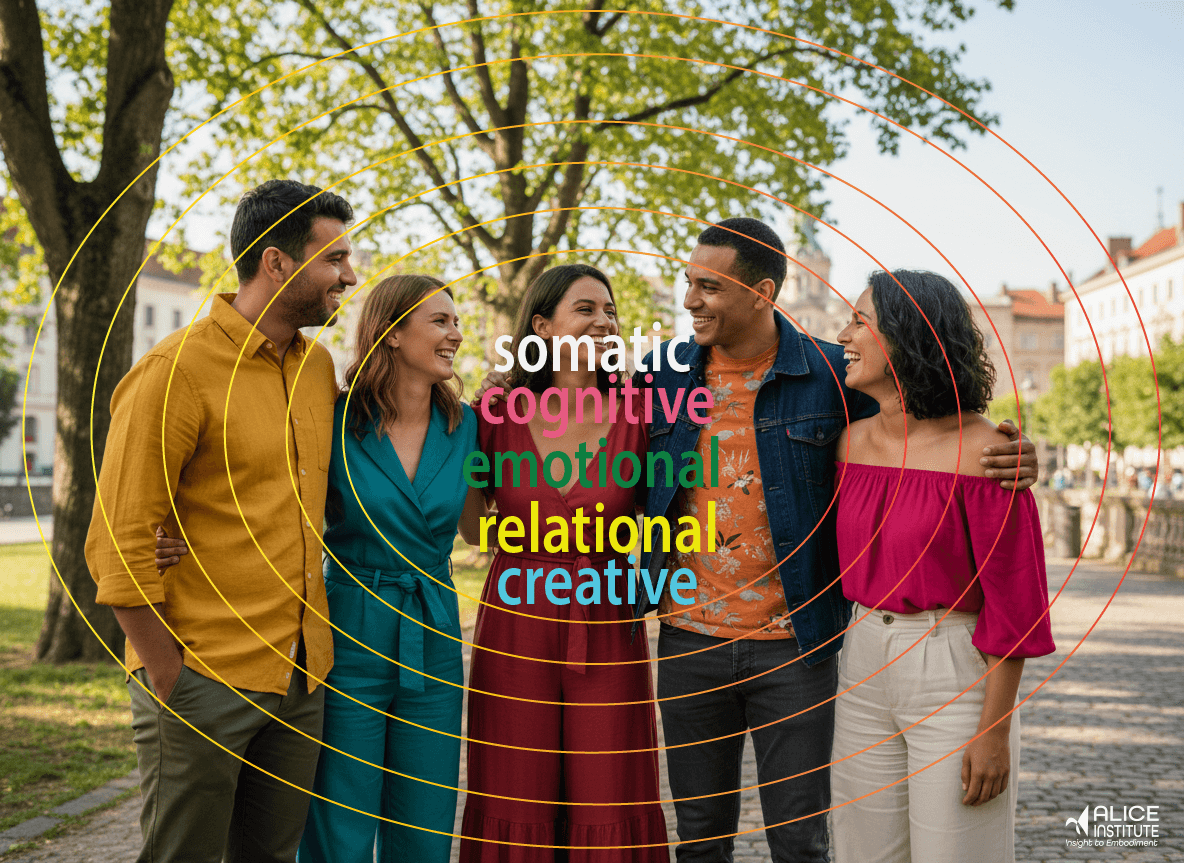
Whole Body Intelligence offers a new relational structure—one that does not rely on fixing individuals or assigning blame, but on cultivating shared awareness and collective agency.
Navigating Complexity Without Collapse
When Whole Body Intelligence is accessible, people can:
sense what matters before they can articulate it
hold multiple perspectives without fragmentation
respond creatively rather than reactively
navigate complexity without collapsing into urgency or control
This capacity is no longer optional.
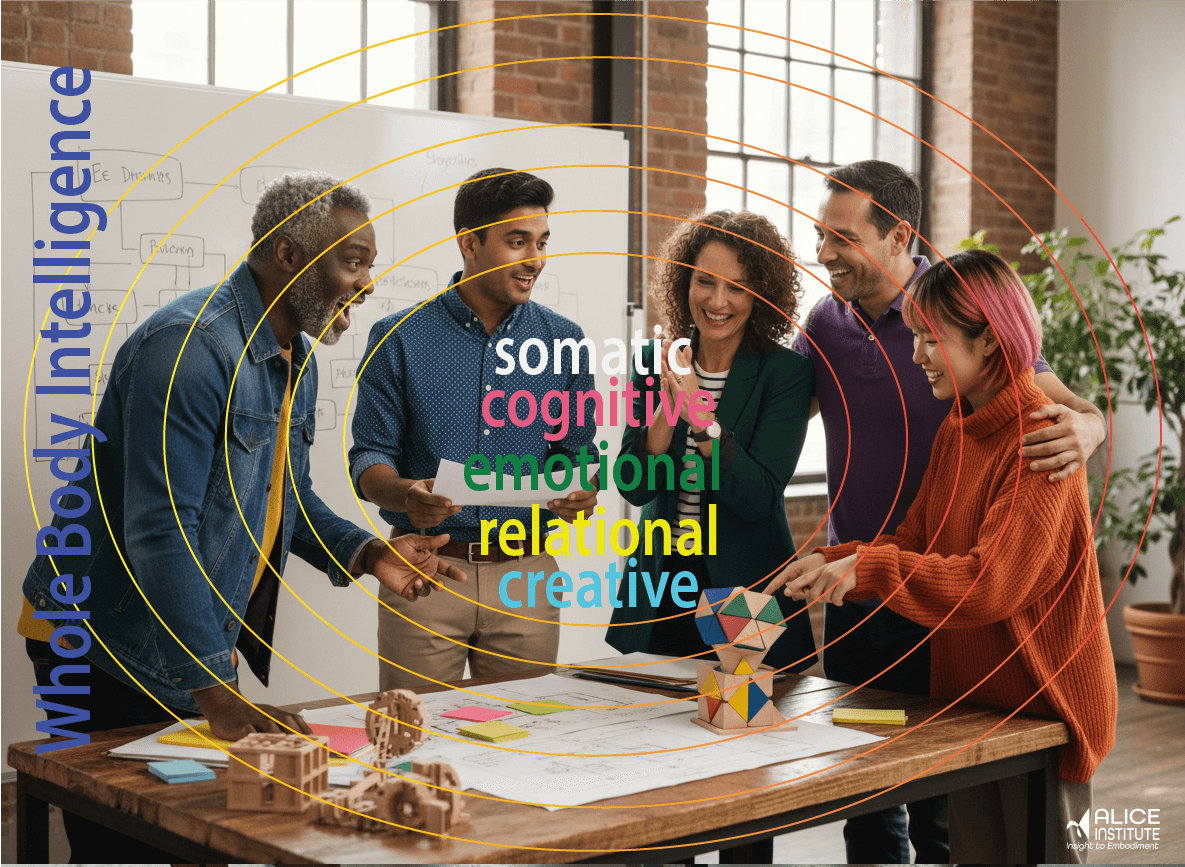
In a world where simple solutions cannot meet complex conditions, Whole Body Intelligence transforms complexity from overwhelming to navigable—even generative.
Part Return, Part Innovation
and All Parts Integration
Whole Body Intelligence is not new.
It is a return to what is latent within us.
Across cultures and histories, humans relied on integrated ways of knowing. Only recently have we privileged cognitive intelligence above all else. The gains have been significant—yet incomplete.
For human evolution to progress, our intelligences must be brought both online and in line with what our current context requires.
Modern systems have conditioned us away from integration. The urgency of restoring it is becoming unmistakable.
In a world facing ecological, relational, social, and existential challenges, fragmented intelligence is no longer viable.
Our species can no longer afford to ignore the broader spectrum of human knowing.
Whole Body Intelligence as a Way of Living
Ultimately, Whole Body Intelligence is not a technique.
It is a way of being human that restores coherence between who we are, how we relate, and what we create together.
It enables:
Individuals to reclaim presence and integrity,
Families to rebuild trust and coherence,
Groups and societies to design futures grounded in life,
Organizations to lead with clarity, creativity, and conscious intelligence,
It does not promise certainty.
It offers something far more powerful:
the capacity to meet what is real with clarity, coherence, care, and creativity.
This is the foundation of the ALICE Institute’s work and the compass for a new kind of leadership, relationship, creativity, and living.
About the Author
Alice Gannon is a leadership advisor, facilitator, and creative whose work sits at the intersection of consciousness, relational development, and organizational strategy. With decades of experience supporting business, civic, and governmental leaders at local, national, and international levels, Alice brings a rare combination of strategic depth and embodied human intelligence to her work.
Alice is the founder of the ALICE Institute, a learning and development center dedicated to advancing Whole Body Intelligence — an integrated approach that unites somatic, emotional, cognitive, and relational awareness into a single coherent system. Her proprietary ALICE Framework forms the foundation of her coaching, facilitation, and leadership, relationships, living and creativity programs. Her curriculum draws on systems development, neuroscience, developmental and transpersonal psychology, trauma-informed practice, emotional intelligence and creative fields.
Her career spans brand visioning, marketing communications, and strategic advisory roles, and she is also the principal of Ravennabridge, a consulting agency that applies Whole Body Intelligence to organizational strategy, branding, and cultural systems.
Alice works in private practice through alicegannon.com with individuals, couples, families, and groups. She is also an artist, writer and speaker.


... I am so glad you're here and I want to welcome you to reading our articles here and personally invite you to participate in our events. What we co-create here is unique.
These events are about discovery and unfolding you from surviving to thriving.
We are excited that you are curious about being a part of this and we look forward to seeing you soon!
Alice Gannon
Have a question, comment on what you're reading here, or have idea for an event?
Let us know!
We want to hear from you!
The ALICE Institute © Copyright 2026 hiberno Studios LLC. All rights reserved. Terms & Conditions