



Why Whole Body Intelligence Matters Now
Why Whole Body Intelligence Matters Now:
Coherence, Complexity, and the Future of Human Capacity
We are living in a new timeline—one defined by convergence.
Across leadership, relationships, organizations, and global systems, people are being asked to navigate complexity, speed, and uncertainty at unprecedented levels.
What once worked reliably now strains under the weight of overlapping demands, accelerating change, and rising stakes.
Despite extraordinary advances in talent, information, and technology, many sense that something essential is missing.
It is not a lack of intelligence.
It is a lack of access—access to the full spectrum of human intelligence we actually possess.
This is where Whole Body Intelligence becomes not only relevant, but essential.
Beyond Regulation: From Control to Coherence
Much of contemporary culture—personal development, leadership training, and organizational design—has been oriented around regulation: controlling emotions, managing behaviors, stabilizing performance, or optimizing outcomes.
Regulation has its place.
But it has become the dominant lens through which we attempt to meet complexity.
The problem is simple:
Regulation alone cannot meet the moment we are in.
Regulation is built on the premise that the challenge lies within individuals—that people need to be corrected, optimized, or contained. This framing treats intensity, emotion, uncertainty, and complexity as problems to be subdued rather than intelligence to be listened to.
Whole body intelligence offers a different premise.
The future of our shared life—individually and collectively—does not depend on better regulation of people. It depends on greater coherence in how we relate, decide, and create together.
Coherence is not about suppressing intensity or smoothing over difference. It is about alignment across the full human system—somatic, emotional, cognitive, and relational—so that intelligence can move freely where it is needed most.
Coherence is central to operating from what we call Whole Body Intelligence. And Whole Body Intelligence matters. Indeed it matters a great deal especially now.
What Is Whole Body Intelligence?
Whole Body Intelligence refers to the integrated capacity of the human system to perceive and respond to reality through more than the mind alone.
It includes:
Somatic awareness — the body’s intuitive, sensory, and physiological intelligence.
Emotional intelligence — affective signals and relational attunement.
Cognitive intelligence — thought, analysis, language.
Relational intelligence — awareness of fields, dynamics, patterns, and shared meaning.
Creative intelligence — the capacity for insight through integration.g.
These are not separate skills.
They are interdependent dimensions of one unified intelligence.
When Whole Body Intelligence is accessible, people can:
sense what matters before they can articulate it
hold multiple perspectives without fragmentation
respond creatively rather than reactively
navigate complexity without collapsing into urgency or control
When it is not accessible, even extraordinary people fall back on old habits, defensive strategies, or narrowing patterns that limit perception and choice.
The Hidden Cost of Our Own Disembodiment
Whole body intelligence refers to the integrated capacity of the human system to perceive, sense, interpret, and respond to reality through more than cognition alone.
It includes:
Somatic awareness (the body’s sensory and intuitive intelligence)
Emotional intelligence (affective signals and relational attunement)
Cognitive intelligence (thinking, analysis, language)
Relational intelligence (awareness of fields, dynamics, and systems)
Creative intelligence — the capacity for insight through integration
These are not separate domains. They are interdependent dimensions of a single, living intelligence.
Whole Body Intelligence offers a different premise:
Our future stability—individually and collectively—depends not on better control of people, but on greater coherence in how we relate, decide, and create together.
Coherence is not about smoothing over difference or suppressing intensity.
It is the alignment of our entire human system—somatic, emotional, cognitive, and relational—so that intelligence can move freely where it is needed most.
Complexity Requires More Than Thinking
Modern culture privileges speed, abstraction, and performance.
In this environment, many people—especially leaders—learn to override bodily signals, emotional insight, and relational feedback in the name of productivity or stability.
Over time, awareness narrows and the human system loses access to creativity, adaptability, and real-time intelligence.
This is not personal failure.
It is a systemic condition.
Ironically, the more pressure we face, the more essential Whole Body Intelligence becomes—yet these are the exact moments when people are most likely to revert to control, rigidity, or familiar coping strategies.
Whole Body Intelligence restores access to intelligence under pressure—precisely when it is most needed.
Leadership as a Human Systems Practice
Take Leadership for instance. Leadership today is rapidly being required more to become less about authority and more about capacity—the capacity to orient under uncertainty, to hold tension without collapse, and to make decisions that account for human, relational, and systemic impact.
Whole body intelligence reframes leadership as a human systems practice.
Rather than focusing on managing people or outcomes (many of which are more nebulous than ever in the sea of change that artificial intelligence brings with it), leaders learn to attend to the conditions that allow clarity, insight, and coherence to emerge—within themselves, within teams, and across systems.
This does not diminish competence or accountability. It deepens them.
Leaders with access to whole body intelligence:
Make decisions with greater alignment and foresight
Create cultures that support resilience rather than burnout
Navigate conflict without polarizing dynamics
Foster environments where intelligence can circulate rather than bottleneck
Relationships as Living Systems
Complex systems—whether families, organizations, or societies—cannot be solved through linear problem-solving alone.
They require the ability to:
sense patterns
hold paradox
respond dynamically
stay present as conditions evolve
This is creativity—not as artistic expression alone, but as a form of relational and systemic intelligence.
Creativity is Not a Personality Trait.
Creativity is not a personality trait.
It is a function of coherence.
When the human system is fragmented, creativity narrows.
When coherence increases, creativity becomes available across decision-making, relationships, and leadership.
This is why Whole Body Intelligence is not optional.
It is central to how we lead, relate, live, and create in a world that is fundamentally alive and in motion.
Leadership as a Human Systems Practice
Leadership is undergoing a profound shift.
Authority alone is no longer sufficient.
Leaders are being asked to orient under uncertainty, hold tension without collapse, and make decisions that integrate human, relational, and systemic complexity.
Whole Body Intelligence reframes leadership as a human systems practice.
Rather than managing people or controlling outcomes—especially in an era transformed by artificial intelligence—leaders learn to attend to the conditions that allow clarity, insight, and coherence to emerge.
This does not replace competence.
It deepens it.
Leaders with Whole Body Intelligence:
make decisions with greater alignment and foresight
create cultures of resilience rather than burnout
navigate conflict without polarization
foster environments where intelligence circulates rather than bottlenecks
A Developmental Pathway: The ALICE Framework™
Whole Body Intelligence unfolds through recognizable developmental stages.
The ALICE Framework™—Awakening, Loving, Integrating, Creating, Evolving—maps this arc across leadership, relationships, living, and creativity.
Awakening — awareness of what is actually present
Loving — non-adversarial relating
Integrating — holding complexity without fragmentation
Creating — access to generative potential
Evolving — coherence that sustains over time
These are not abstract ideals.
They are lived capacities that develop through embodiment and practice.
The ALICE Institute teaches individuals, leaders, and organizations how to access and cultivate these capacities through coaching, training, and certification programs.
Why This Matters Now
Today, we are navigating unprecedented in new futures that are not yet fully formed, challenging us to expand into new versions of ourselves never before required of us.
Climate change, technological acceleration, social division, organizational instability, and personal burnout all point to the same underlying issue:
We are trying to solve living, complex problems with fragmented intelligence.
Whole Body Intelligence does not offer certainty. It offers capacity.
It enables people and systems to:
stay present in uncertainty
respond rather than react
create coherence where fragmentation once prevailed
design futures that are resilient, adaptive, and humane
This is not a soft skill.
It is the foundation of human capacity in a changing world.
From Optimization to Evolution
The dominant paradigm of modern life is optimization—more efficiency, more output, more control.
But optimization has limits in living systems.
Evolution requires something else.
It requires the ability to sense, integrate, and respond to emerging conditions in ways that cannot be predetermined.
Whole Body Intelligence supports this shift—from rewriting the past through new awareness, to engaging the present with greater freedom, to creating futures that reflect coherence rather than reaction.
What these futures look like depends on our capacity to relate—within ourselves, with one another, and in the systems we create.
A Call to Coherence
This moment in history invites a profound shift—from fragmented intelligence to Whole Body Intelligence, from regulation to coherence, from optimization to evolution.
Coherence is not an abstraction.
It is a lived, embodied capacity.
And it is the foundation for how we will navigate what comes next.
About the Author
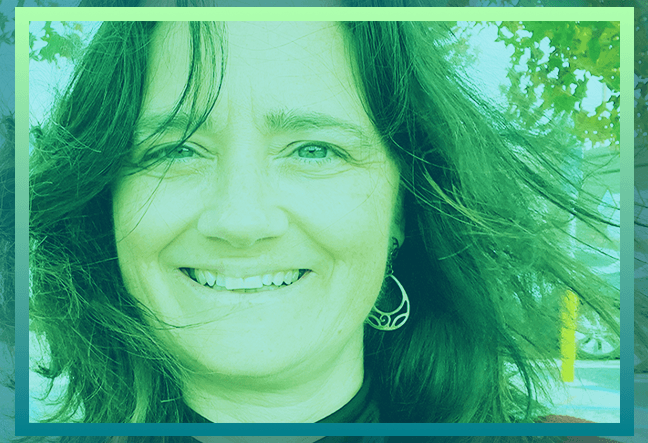
Alice Gannon is a leadership advisor, facilitator, and creative whose work sits at the intersection of consciousness, relational development, and organizational strategy. With decades of experience supporting business, civic, and governmental leaders at local, national, and international levels, Alice brings a rare combination of strategic depth and embodied human intelligence to her work.
Alice is the founder of the ALICE Institute, a learning and development center dedicated to advancing Whole Body Intelligence — an integrated approach that unites somatic, emotional, cognitive, and relational awareness into a single coherent system. Her proprietary ALICE Framework forms the foundation of her coaching, facilitation, and leadership, relationships, living and creativity programs. Her curriculum draws on systems development, neuroscience, developmental and transpersonal psychology, trauma-informed practice, emotional intelligence and creative fields.
Her career spans brand visioning, marketing communications, and strategic advisory roles, and she is also the principal of Ravennabridge, a consulting agency that applies Whole Body Intelligence to organizational strategy, branding, and cultural systems.
Alice works in private practice through alicegannon.com with individuals, couples, families, and groups. She is also an artist, writer and speaker.
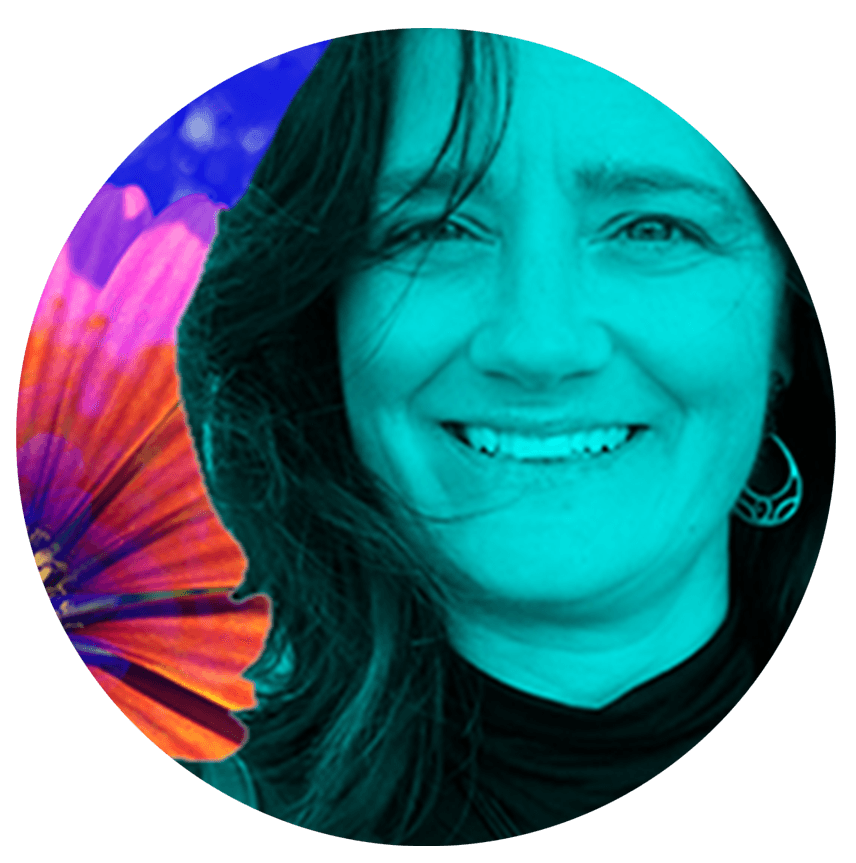

... I am so glad you're here and I want to welcome you to reading our articles here and personally invite you to participate in our events. What we co-create here is unique.
These events are about discovery and unfolding you from surviving to thriving.
We are excited that you are curious about being a part of this and we look forward to seeing you soon!
Alice Gannon
Have a question, comment on what you're reading here, or have idea for an event?
Let us know!
We want to hear from you!
The ALICE Institute © Copyright 2026 hiberno Studios LLC. All rights reserved. Terms & Conditions